1.
I usually wake up to the phone alarm set for 5:30. Then, I leave the house by 6:20 at the latest, walk for about 18 minutes, and catch the same bus every day around 6:40. Although I often rush frantically from early in the morning so I do not miss the bus, I am still a little proud of myself for never actually having missed it.
When that familiar shape approaches in the darkness with its headlights on and the number 44 illuminated on the display board, I silently send my gratitude to it, as usual, for waking up earlier than I did to open a new morning. Walking, taking the bus, and walking again takes nearly 50 minutes for a distance that would take just a little over ten minutes by car, but I do not have any big complaints for it. Even though it is a bit slow, cumbersome, and inefficient, my life has been helped greatly all along by the early morning first bus, which is sufficiently honest.
It usually takes about 15 to 20 minutes for the bus to reach its final stop, and along the way, it passes through neighborhoods where Vietnamese and Mexican people live. And when it goes through there, especially at that crack of dawn, those who board the bus are mostly blue-collar workers heading to their workplaces, whether a factory, construction site, hotel, or restaurant. That can be easily inferred from their attire, which directly reflects their roles, and from logos like “Hilton Hotel” stamped somewhere on it.
Besides that, on some days, a madman or simply a rude person gets on the bus and breaks the early morning silence, and on other days, the small space is filled with a foul odor because of characters of the homeless or drug addict sort. While there are variables from day to day like this, the bus nevertheless tends to carry the familiar scenery, run along a similar route, and take us where we are meant to be on time.

That day was not much different from usual either. Not long after picking me up, the bus entered the Vietnamese neighborhood, and at the stop in front of a small church, it took on an elderly Vietnamese woman. Like me, she takes the same bus at almost the same time and place every day. She is short, with a round face and short black hair, and smelled like an old lady. So even on tired mornings when I was half-asleep with my eyes closed, I could recognize her presence just by that scent. I tried talking to her once, but she seemed to speak very little English. Since then, we became the kind of people who just exchanged awkward smiles whenever our eyes met. At any rate, dressed similarly every day with the same scarf around her and carrying an old backpack, she was heading somewhere every morning.
For reasons I do not know, I have a habit of endlessly falling into the backs of others and imagining their lives. So, as she sat in front of me, I had gotten lost in her back a few times as well. What kind of story led her all the way here to the opposite side of the earth, far away from where she was born and raised? As a small, elderly Asian woman and an immigrant who struggles even with basic communication, how many sweet, spicy, sour, and salty stories must she have had while living in California, which is like a cheerful carnivorous dinosaur? While questions with no answer grew thick like some one-sided love, the bus ran indifferently and entered the neighborhood where Mexican residents lived this time.
Just as the bus is about to leave there, there is another familiar face who gets on almost every day. She is a Latina woman who looks to be in her mid-fifties, and every time she boards the bus, she brings along a rattling metal luggage cart, a backpack stuffed full to bursting, and five or six white grocery bags filled with various items hanging from it. So while she loads all of those, the bus has to stand still and pretend not to notice, and the passengers' eyes are naturally drawn to her.
Although she does not seem particularly mentally unstable on the surface, she keeps muttering something to herself whether sitting or standing. Putting various circumstances together, she seems to be a homeless person sleeping in a parking lot near that bus stop, moving somewhere else with all her belongings early every morning.
That was how she would join the cast at the last stop before our morning bus reached its final destination. After that, the bus would run for a while longer without making any more stops before entering the transit center. Thus, her appearance had always been nothing more or less to me than a signal that my destination was near.
However, that day, after awkwardly placing her shabby bags on the luggage rack near the entrance of the bus and sitting down on the edge of the priority seat beside it, her face was unusually red, and soon thick tears began to fall drop by drop. Although she was making no sound, dead silent, but I was sitting fairly close to her, only a few rows away, so I could not help but notice her silent cry. And that seemed to be the same for the Vietnamese grandmother sitting in the row right in front of me. Suddenly thinking there might be some tissue or something similar, I fumbled around, only to find that there was nothing in my pockets. Feeling a bitter sense of defeat at my own helplessness, I ultimately had no choice but to watch the situation helplessly. Or, in fact, it might be more accurate to say that I could not take my eyes off it because the unexpected turn of events over those few seconds was quite dramatic.
But then, the Vietnamese grandmother rose from her seat, walked over to the homeless woman, and quietly sat down beside her. She opened the front pocket of her worn backpack, pulled out some tissues, and placed them firmly in her dirty, rough right hand. With that, she reached out with both of her hands to hold the woman's left hand, brought them to her own forehead, and softly bowed her head. In that way, the grandmother prayed for her, and the woman's sobs gradually grew rougher. All the while, only the rays of the day's first sunlight, slanting through the bus windows, stroked the backs of those weathered souls leaning on each other. Witnessing this scene from the side, I felt for a moment as if the entire world had held its breath and grown distant, and I ended up tightly closing my eyes.
Looking back, I had almost unconsciously attached labels to the people I met on the bus every morning. A small, weathered grandmother who couldn’t even speak English. A troublesome woman who caused the bus to stop and wait during the busy morning hours. Yet, in that fleeting moment of facing such an overwhelming scene, the façades I had arbitrarily fashioned and placed upon them completely shattered. And for some reason, it caused me to shatter as well. So to speak, it was something like the moment when the real pierces through countless falsities, the moment when the sun of a new day rises through a long darkness, and thus the overwhelming energy sterilizes the countless remaining illusions.
And yet I also wondered, 'How is it that the moments in our lives when what is real appears can be so overwhelmingly intense, yet so profoundly quiet?' Even now, I still chew on that radical sunrise that took place within that silent space on that day.
The next day, I took the same bus at the same stop and at the same time, sitting in a similar spot as usual and watching the bus pick up the elderly Vietnamese woman and the homeless woman. Yet, as always, we exchanged not a single word, gazing only out the window or down at the smartphones in our hands. Then, as if nothing had ever happened, as if no one remembered a thing anymore, the moment we reached the final stop, we hurried our steps and scattered into our own separate directions.
Still, the truth is, I feel as though I haven't taken even a single step away from that scene, still endlessly pacing around its edges. That must be because I am still so thirsty, so ravenous, for this thing we call "life."
2.
Starting my day with yoga, I catch a bus near my home early every morning. The bus then takes me about fifteen minutes to a nearby transit center. From there, numerous bus and train lines stretch out in nearly every direction across the city, so the flow of commuters, students, and tourists never really stops throughout the day.
It is also where nearby unhoused individuals and vagrants tend to gather. So, whenever I pass by, I constantly encounter them smoking cigarettes or lying slumped on the ground with a vacant stare. One morning, for some reason, one of them was bleeding heavily from his arm, creating a tense and intimidating scene as police cars gathered with their lights flashing even in the early morning. There are also days when an unusually foul odor makes people frown and turn their heads away. There was a lunatic yelling at the top of his lungs and threatening pedestrians, while there was also a strikingly well-proportioned, handsome man wearing his T-shirt backwards, bouncing around like a gorilla with endless, lively energy, holding a random broken plastic cup in his hand.
Yes, this was California, a place that has always been extraordinarily diverse in race and culture and respectful of individuality, and one that was renowned for being exceptionally vibrant and self-assured even among the other states. Perhaps that is why even the unhoused or the vagrants tend to have little hesitation about asserting their presence or demanding their rights. In this way, they become, as I step off the morning bus, the first breath I breathe, the first impression I receive of the world that day.
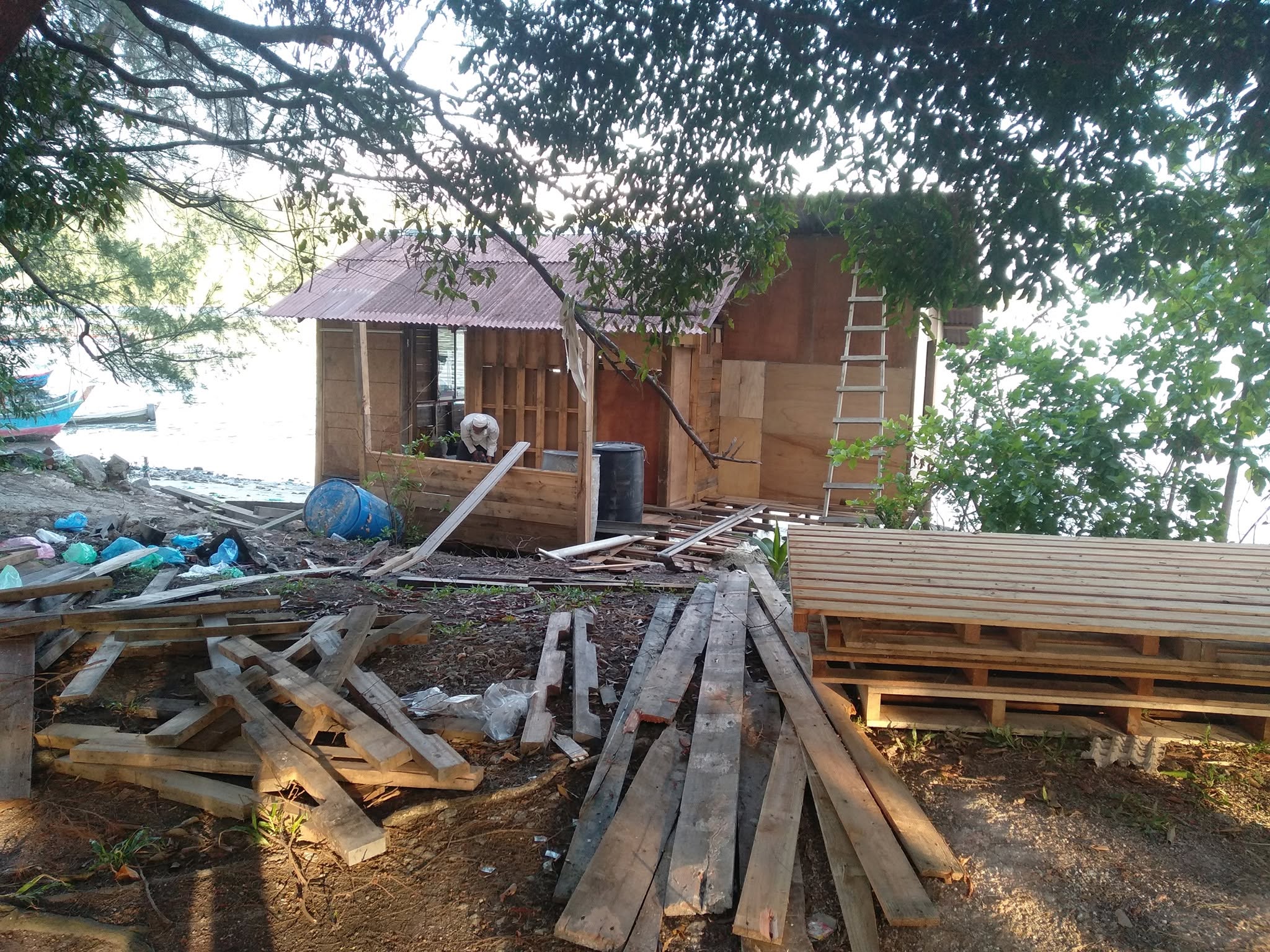
It takes another twelve or thirteen minutes to walk from that area where those ghosts linger to my destination, the yoga studio, and halfway along the way, there is also a state psychiatric hospital. And near the hospital’s low, pink walls, people who, at a glance, seem far from ordinary, appearing mostly dangerous, depressed, or somehow intoxicated, often gather like zombies. Though I have never exchanged words with them, judging by the fact that so many unhoused individuals who appear to suffer from mental illness happen to wander around that particular hospital, I can only assume that they may once have lived there. Unable to enter the grounds because of the security guards stationed around the parking lot, they seem to form a long line along the wall, drifting around the place like satellites that have lost contact. Every morning as I walk past, covered spots like bus shelters are invariably filled with the luggage carts of these drifters, with their limbs or faces occasionally peeking out from behind as they sleep hidden away.
After passing through these scenes in this way, reminiscent of Dante’s Inferno, I finally arrive at my destination at the end of the road. It is a place where I carry the accumulated fatigue, waste, cluttered thoughts, and emotional discomfort of daily life, like a burdened camel, only to wring out and pour away every last drop. At the same time, it is also a place where I awaken and circulate a bright energy from my source, one far broader, deeper, and higher than myself. Thus, at my yoga studio, I experience a vital force more intimate, and therefore more powerful, than anywhere else in this city. Perhaps that is why, whenever I go along that road, I cannot help but wear a bitter smile at the remarkable coincidence of passing through what may be the bleakest and most desolate ruin in this city, only to arrive at a place that is the most vibrant, and even, in some ways, sacred.
Yet, because nearly everyone practicing at the yoga studio drives their own car, they usually zoom past this road with their eyes fixed straight ahead. So this dramatic secret hidden along the way is likely mine alone to know. Thus, every morning, I walk through a hell known only to me, and knock on the gates of heaven.
On some days, in the middle of a yoga class, the face of a transient I encountered that morning suddenly comes to mind, and as it does, my mind sways and falters just like my body losing its balance during a pose. In this way, I tend to experience an especially vivid resonance with those broken beings drifting along that road. That is likely because, though I now stand here rather than there, it was not so long ago that I belonged to that side rather than this one. That’s also likely because, while a boundary as distinct as our physical distance seems to exist between their lives and mine today, in truth, it was not that long ago that my own life, burdened by my own stories, was trapped in an inescapable mire of a vicious cycle no different from theirs.
So when they run amok, intoxicated by alcohol, drugs, pain, or whatever else, and when they suddenly stop screaming and stare at me with hollow, vacant eyes as if a fuse had blown, I could somewhat fathom what that truly was and what it meant, and so, in the end, my heart, too, cannot help but falter.
Chewing over that heartache countless times, I suddenly came to realize one day: had I not journeyed through that hell during a season of this life, my understanding of human existence would have missed many vital truths. And likewise, had I been born on this side rather than that, spending my entire life safe within the fence, my life would never have gained the courage or the drive to break through its superficial shell and radically approach a deeper essence.
Yes, it was each passing day, every single day I spent in that hell, that truly completed the meaning of the heaven I reached at the end of this road. Had it been otherwise, even if I were to reach a place of rest as I do now, I would never have fully fathomed its meaning nor made it entirely my own. Looking at it that way, the heaven I so desperately longed to reach, and which I will continue to look up to countless times, had to be, in the end, no dazzling mirage, but the very middle of my utterly messy life right now. And all I must do in response is to catch my soul, which flutters and tries to take flight several times a day like a legless bird or an unanchored wind, and pull it back down to this earth again and again, so that I may take root deeper than yesterday and ripen my flower buds further than the season past.
In this manner, the moment I took that heavy step into a deeper layer of this life, a new sun of a new day was blooming in full outside the studio window. Praying that its warmth would reach all the way to those suffering beings asleep on the road I had just passed, I stared into that brilliance for a long while without blinking.
© Text & Photos by Tao Jung