My client J is now in his late seventies, and it has been a little over two years since we began working together. He was educated at one of the best medical schools in this country, indeed, one of the finest in the world, a name that alone is enough to change the look in people’s eyes. He then spent his entire career as a pediatric oncologist at some of the country’s most prestigious major hospitals, fighting alongside children battling cancer. Yet even someone so remarkable cannot escape aging and the end of this life, so over the past year in particular, his body has visibly weakened, making it increasingly difficult for him to manage even the basic activities of daily life on his own. So now he was looking into moving into a high-end senior living community with caregivers and medical staff on site.
When I visited his luxury apartment for a session last week, as always, his desk, crowded with thick medical books, was covered with colorful, glossy brochures from several upscale senior living communities in and around our city. I picked one up at random and opened it to find that living there required a monthly fee nearly seven or eight times what I pay in rent. Though we didn't know each other well enough to know exactly how much he had in total, that amount didn't seem to pose much of a burden for him.
In short, throughout his life, he had achieved monumental academic and professional success, perhaps reaching a level I could never attain no matter how hard I tried, and rose to a position truly worthy of everyone’s respect. That was an undeniable fact. Yet ironically, when I met and spoke with him not as a doctor or scholar, but simply as a human being, I often felt a strange, inexplicable incongruity in his life, and indeed in J himself. It kept leaving me tilting my head in puzzlement.
To put it another way, as if evoking a certain stereotype of older American men, when you opened the refrigerator door in J’s expensive apartment where he lived alone, the two shelves on the left were neatly lined with all kinds of Coke, Coke Zero, Original Coke, Vanilla Coke, Decaf Coke, canned Coke, along with colorful sports drinks, while his freezer was packed with a variety of microwavable frozen meals. He never bought groceries for himself, much less cooked. Instead, his pantry was always stocked with sweet baked goods like muffins, pies, and banana cake, and because he frequently ordered pizza and chicken, the kitchen trash almost always held empty boxes, to the point where I knew all his regular restaurants. As his physical activity continued to decline with age, he could not easily change his lifelong tastes, relying instead on diabetes medication and weight management injections.
Until last year, when he could still move around and stay active on his own relatively freely, he would fly somewhere for a vacation each season. Yet those trips, too, almost always followed the same pattern of staying at first-class hotels, playing golf, enjoying fine dining, and little else, and there was absolutely no room for such things as encounters with an unfamiliar world, nor any heart-stirring sense of wonder or profound emotion. In a way, he seemed to have spent a considerable amount of time in his life neither sad nor desperate nor hungry, and in truth, he had never had any reason or need to be. Instead, when he was not working, he seemed to have spent a lot of time doing little more than sitting in front of the large television in his living room.
Why was that? Was it because as people age, they simply no longer need such things? Or was it merely that neither his body nor his soul had the strength left to pursue them? Perhaps it is the impetuousness of youth, but part of me wanted to kindle a fire in his heart, as if gently blowing on embers in a hearth to catch the firewood, and encourage him to see one more brilliant sunset before this life completely faded. Yet taking the hand of someone who had never cared for such things and guiding our conversations in that direction was far from easy.
Of course, at my age, I know all too well how arrogant it is to interpret and judge another person’s life as I please, and how easily such judgments can lead me away from the truth. And so, as I grow older, I find myself increasingly reluctant not only to impose my own standards on others, but also to measure myself against the desires of others.
And yet, quite apart from such discernment, is it not one of the weighty obligations of our youth to ask ourselves, with fierce sincerity, what kind of guide we will strive to emulate and in which direction we will choose to go, as those who come after, following along the paths of life laid out before us? That is why I cannot bring myself to stop looking closely into the lives of those who have gone before me, as though peering down into a well, striving to understand them as deeply and as broadly as I possibly can.
And from that very perspective, the realization that his life, a life adorned with titles more impressive than anyone I knew, filled with lifelong respect and deference, and marked by a degree of wealth so immense that I could not even begin to tell where on that scale he stood, was actually far more flimsy and impoverished than it appeared once that single outer layer was peeled away, and that perhaps something profoundly essential was missing, became a deeply provocative stimulus to me as time went on. Consequently, even as I checked myself against the potential arrogance of harboring such doubts about his life, I found myself drawn ever deeper into them.
And so, as I continued thinking along these lines, at some point my train of thought reached someone I had encountered in my younger days. In a sense, they had nothing in common, and could even be seen as figures standing at the opposite pole from J. Yet it was only when I began placing their two lives in the same frame and turning them this way and that, observing them from different angles, that I felt as though I had finally discovered some secret paradox contained within them, something like the true message my youth was trying to convey to me.
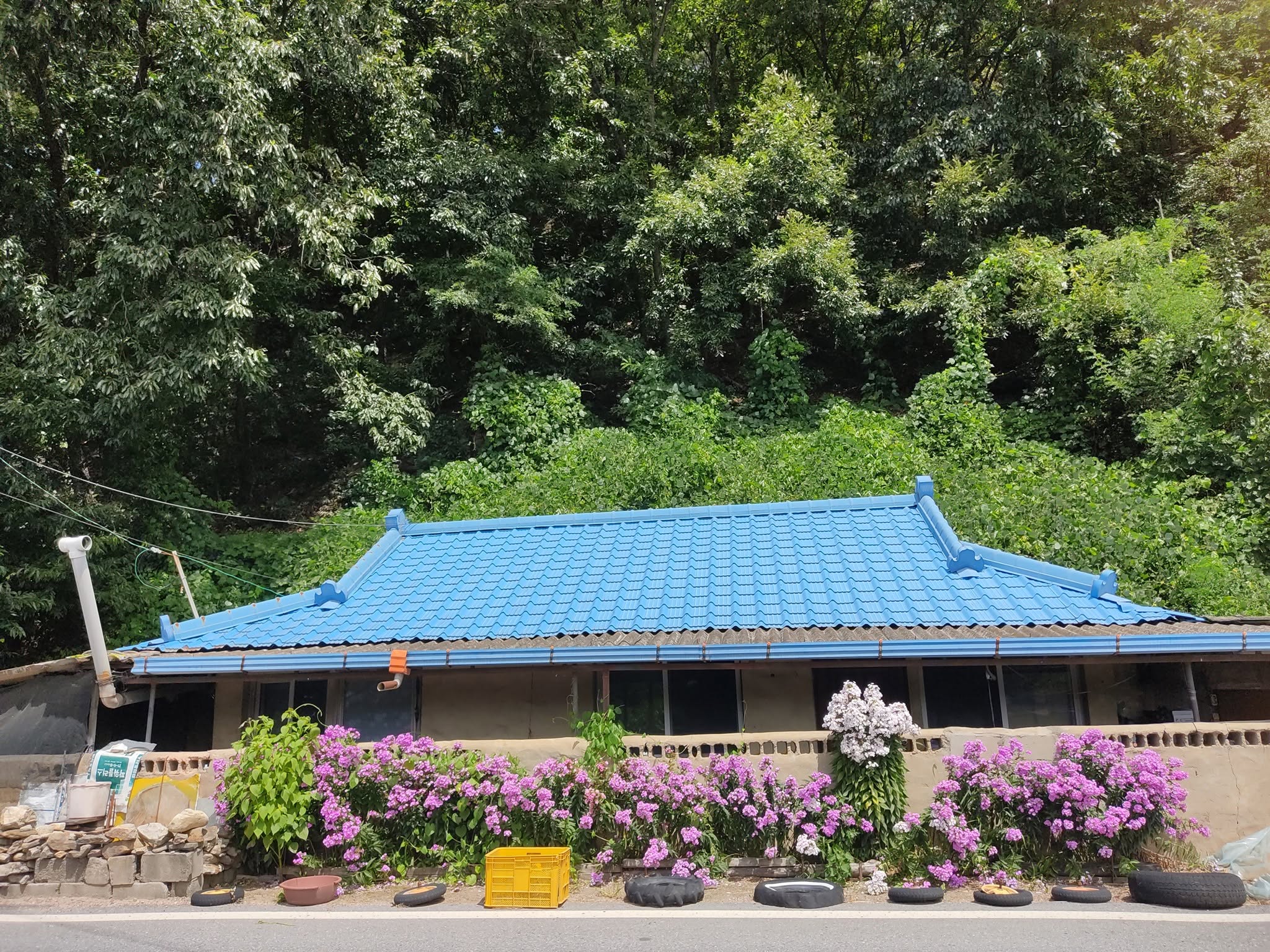
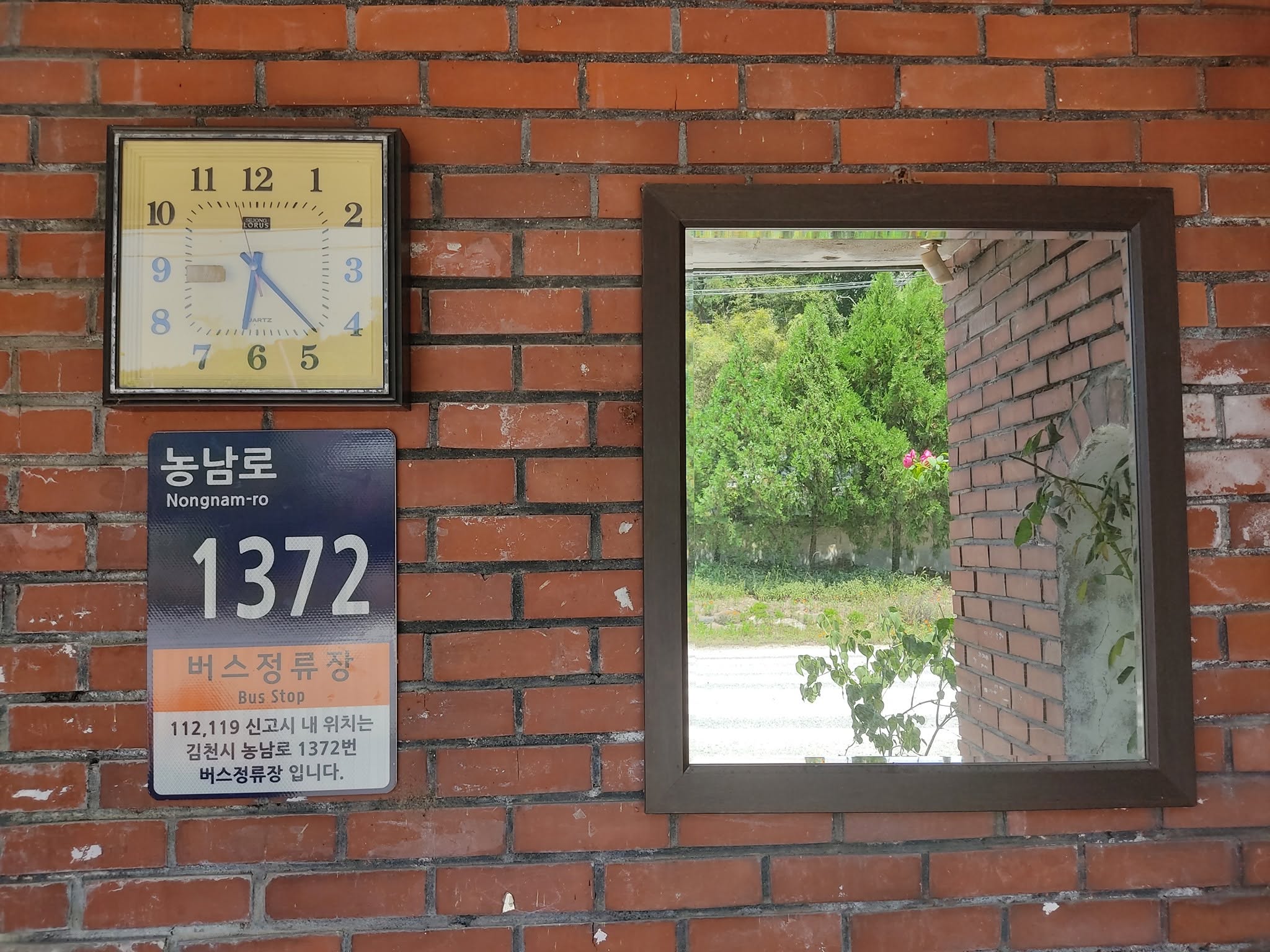
In my mid-twenties, at a time when life had become terribly difficult for all sorts of reasons, both deeply personal and deeply universal, I decided to abandon my home. And after spending some time homeless in Seoul, I somehow drifted until I found myself in a small village at the southern tip of Korea. There stood a wonderful home, a nearly century-old traditional house minimally renovated and preserved, thoroughly imbued with the owner’s energy as she sought to live a life as eco-friendly and circular as possible.
At that time, the owner was looking for someone to look after the house, the vegetable garden, and her pets while she spent a long summer in France with her husband, as well as act as manager when overnight guests came to stay. Whether this was a stroke of chance or a gift from destiny, I have no way of knowing, but as someone who by then had neither house nor home and was exhausted from moving from place to place, sleeping under the stars, I had no reason to turn down such an offer. And so, a new chapter of my life was beginning to unfold.
And that was how I came to meet them, eight or nine elderly women living huddled together in one of the most remote villages in South Korea, and a few more if you counted the neighboring hamlets. Just as they must have felt when a young woman from out of town bought the old village head’s traditional house to live in, they might easily have been wary of a young stranger suddenly showing up in their midst. Yet, thanks to the host's wonderful reputation in the community, along with my natural fondness for older people and my inclination to be polite to others, I was able to gently blend into the fabric of their daily lives without any friction. Looking back, what a blessing it truly was.
Considering that, apart from the homeowner, the neighbor in her late sixties was the youngest in the village, these women were almost all born in the latter years of Japanese colonial rule or around the time of the Korean War, facing Korea’s turbulent modern history head-on and enduring a lifetime of hardship after hardship. Born into an era of rampant son preference, they became unwanted burdens on their families from the moment they were born, unable even to dream of receiving an education. Nine out of ten married young, bore and raised seven, eight, or nine children, dug in the mudflats at low tide and tilled the fields at high tide, somehow managing to raise those helpless infants into grown adults.
As the relentless flow of time passed, their children all grew up and established families in the cities, while their husbands, whose lifespans were generally shorter than those of women, had either passed away before them from chronic illness, accidents, or old age, or had been left bedridden. And left behind in a quiet solitude, the grandmothers would gather almost every day at the village pavilion to escape that summer’s unusually scorching heat. With a few of them, I used to join in doing odd jobs for small wages, picking aronia berries and tea leaves, and at dusk, five or six of us gathered together to boil noodles or make red bean porridge.
In this way, that summer, I was gradually healing my soul, which had grown sick and starved in the city, while closely observing the lives of these grandmothers, lives that, like nameless wild grasses, went unnoticed yet were imbued with a tenacious and beautiful vitality.
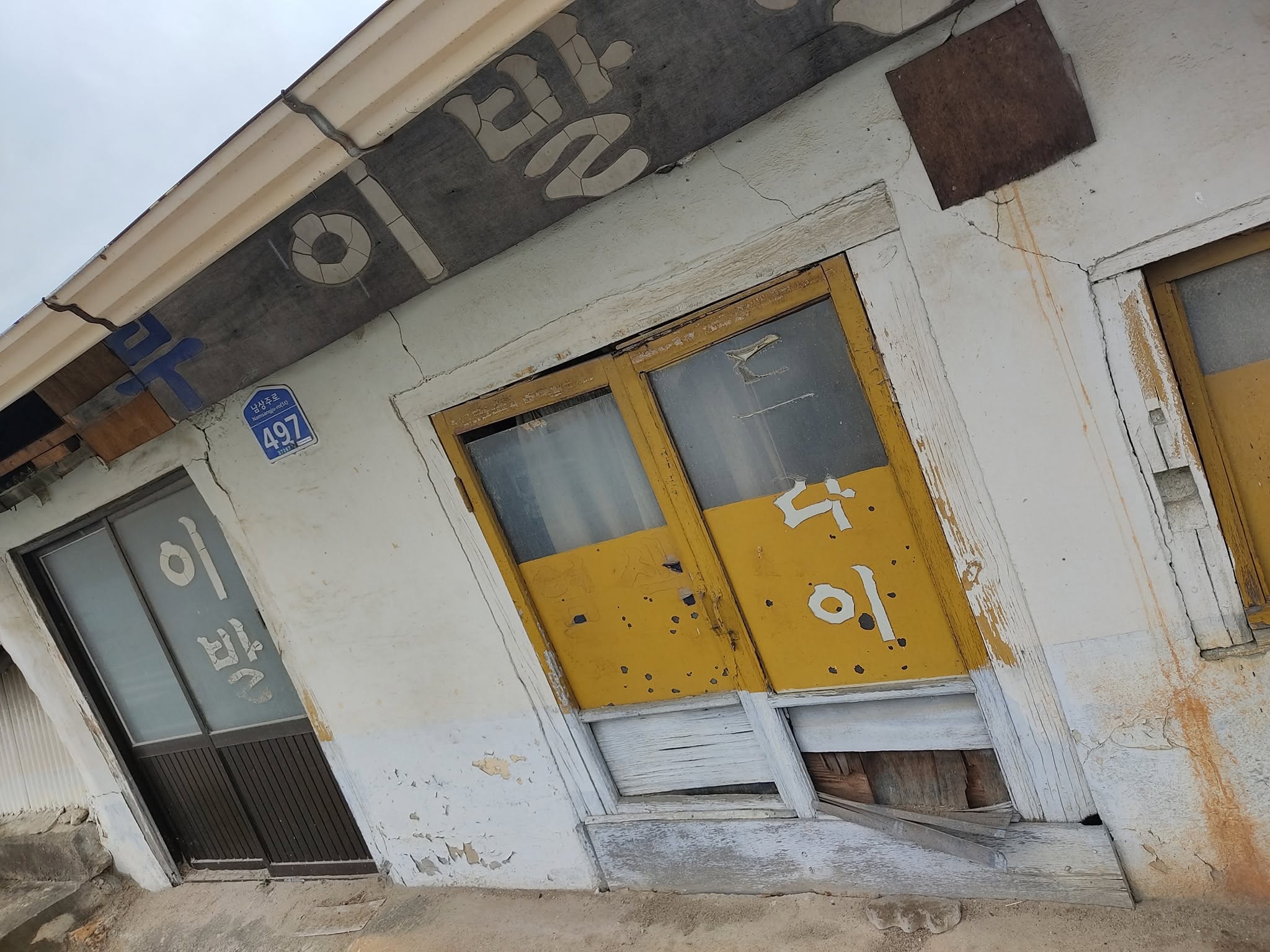
In short, they were people who had practically nothing to their name. The world-renowned university J, their contemporary, had graduated from was far beyond their wildest dreams. Most of these women had not even finished elementary school, and a few had yet to fully learn the Korean alphabet. Their income consisted of little more than a few pennies earned from selling garden greens on market days, a basic government pension, and, for those slightly better off, a modest allowance sent by their adult children in the cities, who were barely getting by themselves. And occasional public work programs, through which they earned a modest daily wage by cleaning the village entrance or pulling weeds alongside their neighbors, made up almost all the rest. Naturally, a luxury apartment or an upscale retirement community like J’s was entirely out of the question. Furthermore, as women and mothers who had lived through poverty and a lack of education, they had likely never had much of a chance to stand tall, hold their heads high, and assert themselves wherever they went.
Yet those lives, having possessed nothing, learned nothing, and never once received the respect of the world, were firmly filled with something just as precious as the life of someone who brings Coca-Cola and fast food to mind, and perhaps with things far more essential and profound than that.
Having lived like trees whose countless branches of possibility had been severed against their will, leaving only a bare frame, they endured and forgave truly countless acts of violence inflicted by their era, by poverty, and by rigid convention. Although such lives could never be fully captured in a few sentences, even setting aside the countless details, the life they lived and the vitality with which they stubbornly and relentlessly carried it on, sweeping and wiping, embracing their children, scraping by to put food on the table, and raising up what had fallen, were not merely fine rhetoric, but a rather brilliant achievement, one before which I could not help but feel a quiet, solemn reverence.
Staying with them, on sunny days we would pile up mountains of green onions at the village entrance and trim them, bursting into fits of laughter as we worked. At dusk, after threshing sesame seeds, I took a bundle of well-dried sesame stalks to use as kindling to warm the damp underfloor heating during the rainy season. On days when we planted rice, the whole village would turn into a feast, bringing everyone together, from their adult children who lived away in the cities to workers like me brought in from the town’s day labor office when extra hands were needed. With the smells and sounds of human life all around us and that pleasant ache spreading through our bodies at the end of a hard day’s work, life felt so full, so complete, so rich. To me, every single one of those moments genuinely felt like a living scene from a painting by Rousseau or Millet, or a passage from a novel by Turgenev or Tolstoy.
And what about that annual village outing, when everyone rented a tour bus and set off together for Danyang in Chungcheongbuk-do? Sure, as a picnic for rural farmers and farm wives with little experience of the wider world, it might not be something comparable to business class, brand-name hotels, or golf memberships. Yet, thrilled at the rare chance to catch a breath of fresh air, the grandmothers’ voices grew exceptionally loud. They packed and shared feast food, threw wild dance parties inside the bus, and snapped endearingly tacky photos.
Truth be told, all of it was so much more vibrant, dynamic, and full of life than the refined, sterile, neatly packaged convenience-store-lunchbox existence of city dwellers that I eventually found myself wanting to shout toward the city I had left behind: “Look over here! The healthy beauty and true flavor of real living are right here, so take a look!”
Of course, I am not unfolding this reflection here to argue over which of the two is more valuable or inferior. The subtle contrast between these two ways of life that I happened to encounter at different stages of my life, along with the countless other ways of living I will surely meet in the future, will ultimately harmonize like yin and yang, helping us lead more balanced lives. And somewhere between them, the outcome of our efforts not to lose either is, in the end, nothing other than our very lives and the progress our generation achieves upon the foundation of those before us.
Yet perhaps the reason I have been suffering from this nameless thirst lately is that, as I look around, I increasingly feel that it is becoming rarer and rarer to find people who genuinely question and explore what is truly important in their existence, what is more meaningful and precious to them, and then actively shape their lives in that direction, as if experimenting with their own possibilities.
That someone who possesses nothing may, in fact, be closer to the joy of truly being alive than someone who appears to possess everything. And that a brilliant doctor who graduated from the finest school in the world undoubtedly has wisdom about life to learn from someone who has not even fully learned the Korean alphabet and has never once crossed the threshold of a school in their entire life. And that, when I think about it, perhaps the things that raise our weary souls back up and help guide this one life of ours in a wise and healthy direction are closer to the things we have lost without even realizing it than to the things we are so diligently pursuing.
Such thoughts and questions keep piercing me with a nameless loneliness, and I wonder why in today’s world, even as we live and live with every ounce of our strength, the things that matter most somehow always seem to be standing so very far off in the distance.
Living in a world where the scarcity of such things leaves me dry-mouthed, breathless, and nauseous like altitude sickness, I have finally come to realize that those who live their lives like the very last wolves of the wilderness emit a sound and a scent by which their presence can easily be recognized, even without them trying to reveal themselves.
If so, what about me? While fighting tooth and nail in this city to defend my own small foothold with every fiber of my being, have I unknowingly let go of or forgotten what is far more important and meaningful? As I breathe in and pass through mysterious, hazy clouds of dust day after day, has my own life also ended up floating and drifting without me even realizing it? I pressingly ask myself these very questions.
A life lived only by prescribed answers, ending as nothing but an empty shell, versus a life lived honestly loving and protecting what is truly precious to me with all my being, even if I never fully figure out what the right answer is. The reason I ask myself these questions so desperately is that I have not the slightest desire to lose sight of the latter while struggling to become the former, and that will remain true for the rest of my days.
© Text & Photos by Tao Jung